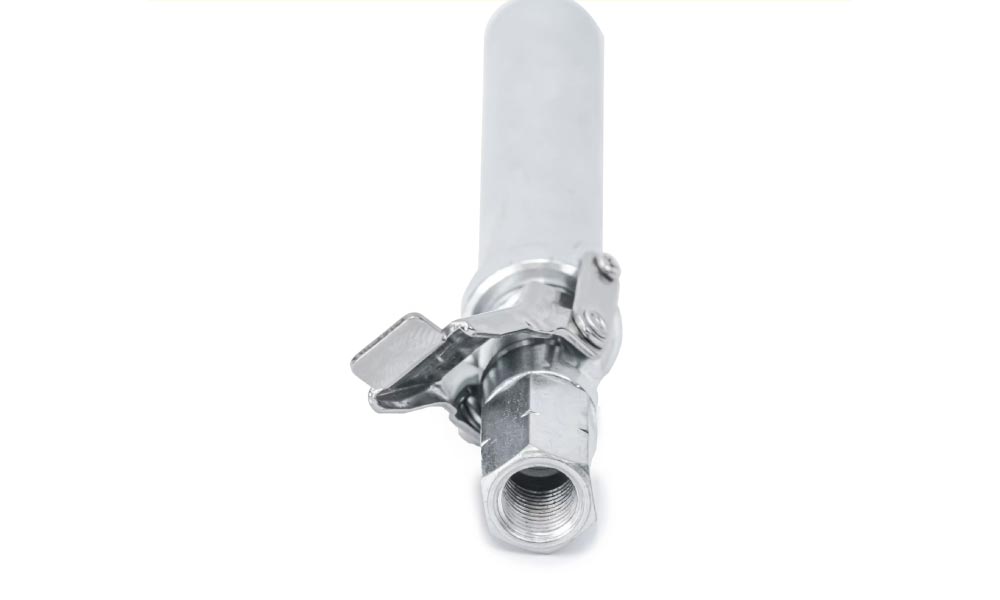
Maintaining grease couplers is an important part of keeping lubrication equipment reliable. A coupler that is clean, undamaged, and working correctly helps grease reach the intended lubrication point while reducing leakage and connection problems.
This guide covers practical inspection, cleaning, lubrication, and troubleshooting steps for grease couplers used in industrial maintenance.
Why Grease Coupler Maintenance Matters
Grease couplers connect lubrication equipment to grease fittings on machines. If a coupler is worn, dirty, or damaged, it may leak, fail to lock correctly, or make grease application more difficult.
Routine maintenance can help reduce premature wear, support efficient lubrication, and prevent avoidable downtime.
Basic Grease Coupler Maintenance
Visual Inspection and Cleaning
Inspect the coupler regularly for physical damage, cracks, worn locking parts, dirt, or hardened grease.
- Clean regularly: wipe away old grease and dirt with a clean cloth and use a suitable cleaning product if required.
- Inspect seals: check seals and other soft components for wear, damage, or leakage.
Use the Correct Grease
Use grease that is suitable for the machine and lubrication equipment. Follow the equipment manufacturer’s recommendations for grease type and maintenance intervals.
Check Pressure and Grease Flow
If the coupler is difficult to use or grease does not flow correctly, check the grease gun, hose, fitting, and coupler for blockage or damage.
- Check pressure equipment: where pressure measurement is required, use suitable and properly maintained tools.
- Review operating pressure: make sure the coupler and grease gun are used within their rated pressure range.
Replace Worn Components
Couplers and seals wear over time. Replace damaged or worn components before they cause leakage or connection failure.
- Create a regular inspection and replacement schedule.
- Use suitable replacement parts from a reliable source.
Preventing and Solving Common Problems
Grease Leakage
Leaks often occur around worn seals, damaged threads, loose connections, or grease fittings that are in poor condition.
- Inspect the connection between the coupler and fitting.
- Replace damaged seals or components.
- Use only sealants or thread products recommended for the specific connection.
Excessive Heat
If lubrication equipment becomes unusually hot, stop and identify the cause. Heat may be related to pressure, blockage, friction, or operating conditions.
Monitor the working environment and make sure equipment has suitable ventilation where required.
Restricted Grease Flow
Poor grease flow may be caused by hardened grease, contamination, a blocked fitting, a damaged hose, or a grease gun problem.
- Inspect the grease gun and hose.
- Check the fitting and coupler for blockage.
- Clean or replace damaged parts as needed.
Conclusion
Regular grease coupler maintenance is a simple way to support reliable machine lubrication. Routine cleaning, inspection, correct operating pressure, and timely replacement of worn parts can help prevent leaks and improve maintenance efficiency.
By including grease couplers in your preventive maintenance schedule, you can keep lubrication equipment working properly and reduce avoidable interruptions.